 Wine Advisor



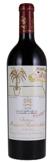
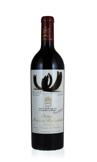
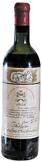
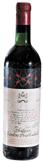
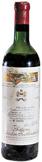
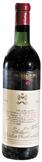
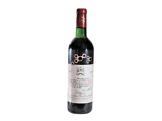
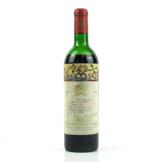
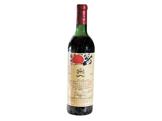
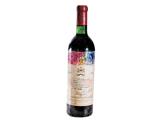
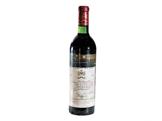
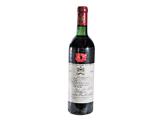
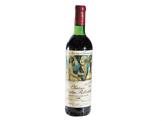
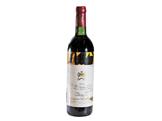
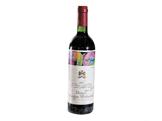
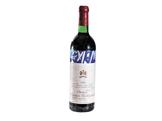
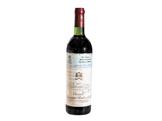
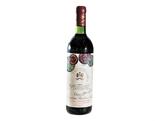
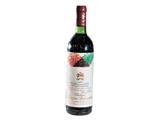
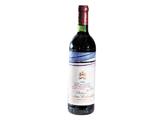
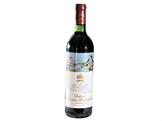
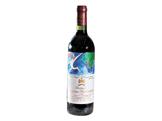
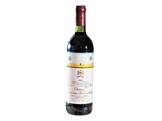
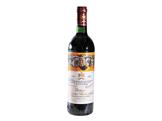
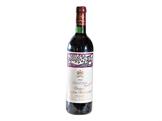
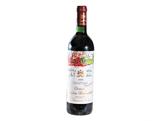
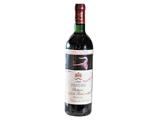
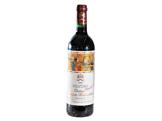
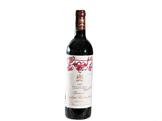
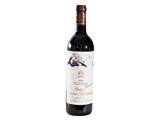
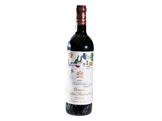
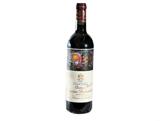
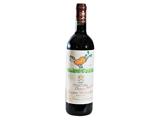
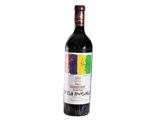
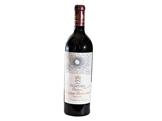
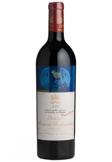
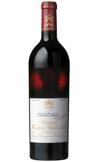
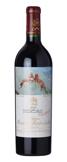
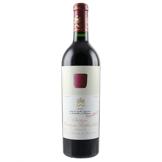
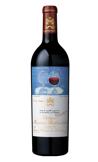
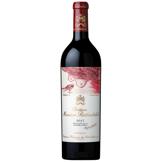
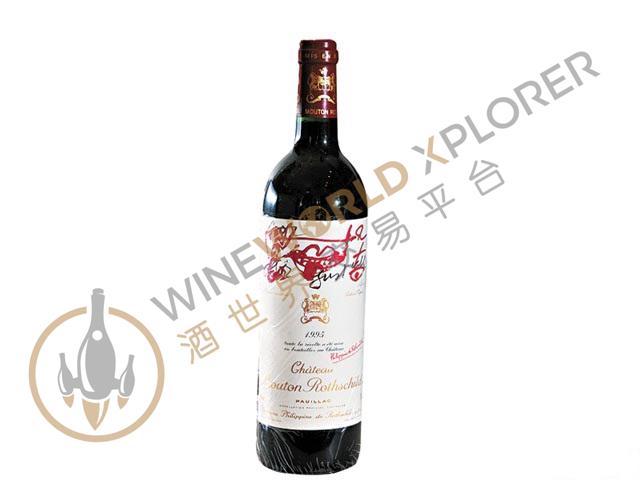
Mouton Rothschild 1995
 View analysis


Description
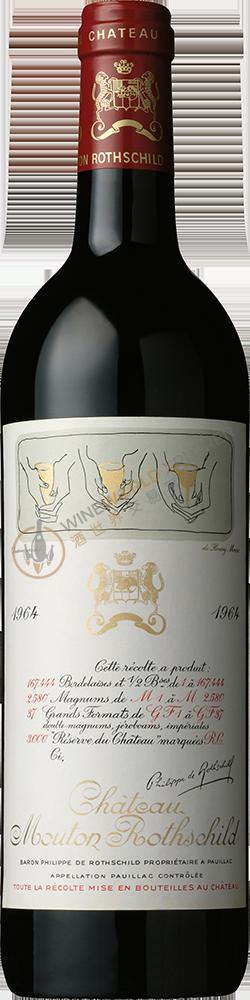
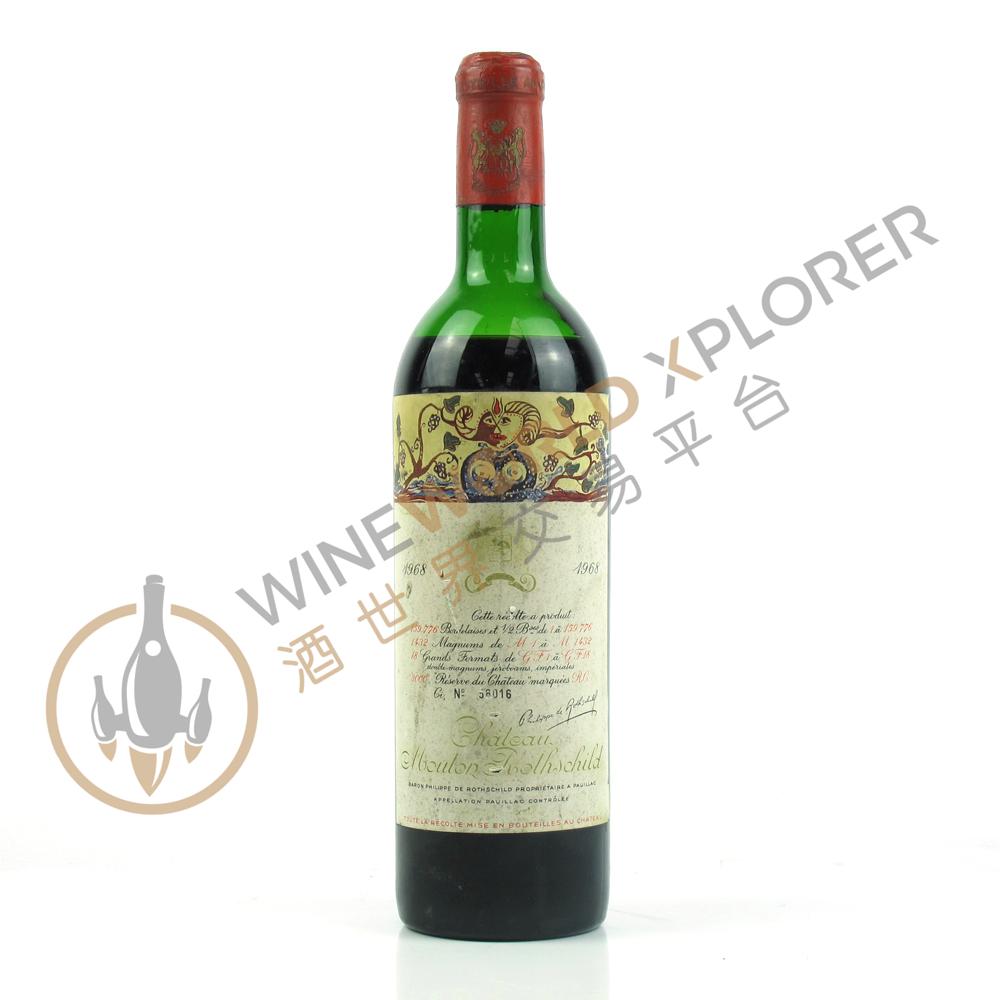
Formerly known as Château Brane-Mouton, it was in 1853 that Baron Nathaniel de Rothschild acquired the property located on the Left Bank in the Bordeaux region in the Médoc. From this date, the Château was renamed Château Mouton-Rothschild. Under the leadership of Baron Philippe de Rothschild, Mouton-Rothschild saw its reputation grow to become an emblem of the Pauillac appellation.
Tasting notes

Reviewed by: William Kelley
While the 1995 Mouton Rothschild has begun to soften somewhat in the last six or seven years, it remains remarkably youthful. Offering up a deep and primary bouquet of ripe cassis fruit and creamy new oak, it's medium to full-bodied, rich and layered, with a vibrant core of concentrated fruit, powdery tannins and a long, resonant finish. This is a pure, beautifully balanced Mouton that simply hasn't evolved very much, even as it closes in on its third decade. While I can attest that it can be drunk with great enjoyment today, real complexity has yet to emerge.
Reviewed by: Neal Martin
This bottle of Mouton ’95 was surprisingly disjointed on the nose and seemed to be cowering next to the ’96. The herbaceous element was more pronounced than anticipated, some lovely hot gravel and stony scents but missing the breeding of the following vintage. The palate is better with blackcurrant, cedar, graphite and slightly coarse tannins. This is like a car that cannot get out of second gear and yet, it seems like a very nice automobile. I would like to taste this again but on this showing, go ’96. Tasted February 2011.
Reviewed by: Neal Martin
First tasted blind for Wine magazine when it was "utterly pure & beguiling". Brilliant. Then at the CECWINE 1995 horizontal in September 2004. A sensuous nose with notes of black cherry and blueberry with a dash of black pepper. Becomes more savory and meaty in the glass. The palate is very harmonious with fresh acidity, well knit unobtrusive tannins and layers of sweet black fruits. Quite a showy, ostentatious wine, spoilt by a lack of cohesion on the finish. Stylish, quite brash. Drinking from 2006 I would say. Finally in September 2005, where it was showing beautifully at the Mouton vertical. A very deep garnet core. An attractive, rounded nose of black cherry, black olives and mocha. Complex and well-knit. The palate is very concentrated, more focused than the 1996, with well-knit new oak. Decadent, sweet ripe red fruits: raspberry, black cherry. Superb length. A slightly more complete wine than the 1996.
Reviewed by: Robert M. Parker, Jr.
Bottled in June, 1997, this profound Mouton is more accessible than the more muscular 1996. A blend of 72% Cabernet Sauvignon, 9% Cabernet Franc, and 19% Merlot, it reveals an opaque purple color, and reluctant aromas of cassis, truffles, coffee, licorice, and spice. In the mouth, the wine is "great stuff," with superb density, a full-bodied personality, rich mid-palate, and a layered, profound finish that lasts for 40+ seconds. There is outstanding purity and high tannin, but my instincts suggest this wine is lower in acidity and slightly fleshier than the brawnier, bigger 1996. Both are great efforts from Mouton-Rothschild. Anticipated maturity: 2004-2030.
Reviewed by: Robert M. Parker, Jr.
After less than persuasive performances in two potentially great years, 1989 and 1990, Mouton-Rothschild appears to have settled down, producing fine efforts in recent vintages, culminating with the enormously promising, unquestionably profound 1995. This wine is evolving into one of Mouton-Rothschild's greatest vintages. It boasts an inky purple color, as well as a powerful, blockbuster nose of explosively jammy cassis intermingled with toasty new oak, minerals, and spice. The wine is layered, with extraordinary depth, richness, glycerin, and length. This is undoubtedly the greatest Mouton since the 1986, with a more precocious, up-front character than that wine. A formidable tannin level combined with low acidity (the wine's PH is around 3.8), and magnificent layers of fruit suggest the 1995 will be approachable after bottling, but I expect it to close down (as most Mouton-Rothschilds do) after 6-7 years in the bottle, not to re-emerge for 15-20 years. Anticipated maturity: 2005-2030. Although Mouton-Rothschild can be among the most inconsistent first-growths, when this estate gets everything right, the wine can be as compelling as any produced in Bordeaux.
Reviewed by: Robert M. Parker, Jr.
This wine is evolving into one of Mouton-Rothschild's greatest vintages. It boasts an inky purple color, as well as a powerful, blockbuster nose of explosively jammy cassis intermingled with toasty new oak, minerals, and spice. The wine is layered, with extraordinary depth, richness, glycerin, and length. This is undoubtedly the greatest Mouton since the 1986, with a more precocious, up-front character than that wine. A formidable tannin level combined with low acidity (the wine's PH is around 3.8), and magnificent layers of fruit suggest the 1995 will be approachable after bottling, but I expect it to close down (as most Mouton-Rothschilds do) after 6-7 years in the bottle, not to re-emerge for 15-20 years. Anticipated maturity: 2005-2030. Last tasted 1/97
Reviewed by: Robert M. Parker, Jr.
When Mouton-Rothschild gets everything right it is unquestionably a candidate for the wine of the vintage. Mouton did indeed hit the bull's eye in 1995, making the greatest wine produced at this estate since the legendary duo of 1982 and 1986. The harvest began on September 18 and finished on September 28. A blend of 80% Cabernet Sauvignon, 12% Merlot, and 8% Cabernet Franc, the 1995 appears to be one of those sensational Moutons made from extraordinarily ripe Cabernet Sauvignon, the key at this estate to wines of remarkable volume and mass. It offers a profoundly deep purple color, followed by a knock-out bouquet of jammy blackcurrants, coconut, coffeecake, and smoke. This staggeringly rich, low acid Mouton is enormously rich and chewy, with layers of concentrated fruit, in addition to being extremely pure, exceptionally concentrated, and amazingly silky and sweet. According to cellarmaster Michel Bosq, the 1995's tannin level is similar to such great Moutons as 1986, 1982, and 1961. To put this effort into another context, consider what readers might taste if there were a hypothetical blend of 50% of the 1982, 25% of the 1986, and 25% of the 1985. Such a blend might provide an inkling of just what Mouton has achieved in 1995. Mouton-Rothschild has a tendency to be extremely showy for three or four years and then go into a shell (the 1982 and 1986, after their flamboyant early years, are now forbiddingly backward). My instincts suggest this wine will be utterly profound for another 5-6 years and then shut down for about 20 years thereafter. It is certainly a Mouton that will last for 30 years. All of the wines in this segment were tasted between March 19 and March 28 in Bordeaux. Most of the important wines from both the 1994 and 1995 vintages were tasted three separate times during my ten-day stay in Bordeaux.
Reviewed by: Ian d'Agata
(72% cabernet sauvignon, 19% merlot and 9% cabernet franc; pH 3.68; IPT 64; 12.4% alcohol; 88% new oak; 95% selection for the grand vin): Very dark, fully saturated ruby to the rim. Deep, brooding, rich aromas of blackberry, violet, milk chocolate, black pepper, cedar and incense; sexy and captivating. Bright and focused on entry, then rich, very smooth and suave, with highly concentrated flavors of red berries, dark plum, cedar and graphite. The extremely long, juicy finish features lively acids, great balance and persistent notes of underbrush and minerals. The mounting tannins coat the palate dry and are still years away from resolving fully. Harvested from September 12 through 27, which suggests that the merlot was probably very ripe. According to Tourbier, We included a bit more merlot than usual because we felt the cabernet sauvignon had particularly tough tannins in 1995 and we didn't want to risk making too tough or structured a wine. So we used the merlot to soften it up a bit. The estate was so happy with the quality of the wine (and the rather high 95% selection for the grand vin speaks volumes), said Tourbier, that they only made 15 barriques of the second wine Petit Mouton, which was launched with the 1993 vintage. A huge volume year, 1995 was characterized by very fine weather through most of the growth cycle but was marred by September rains.
Reviewed by: Stephen Tanzer
Sappy redcurrant and spice nose. Bright, fruity and juicy in the mouth; firmly built and fairly intensely flavored, but the tannins seem slightly dry in comparison to the '96.
Reviewed by: Stephen Tanzer
Reticent nose combines currant, nuts, and shoe polish. More tightly wrapped than the Armailhac, but also larger and more powerfully structured. Seems a bit more rustic than the '96 Clerc-Milon. Finishes with very good length and tongue-coating tannins.
Reviewed by: Stephen Tanzer
Ruby-red, not quite as deep as the '96. Exotic, sweet aromas of currant, lead pencil, spice and woodsmoke. A huge wine that conveys a sense of sheer power, but not quite as delineated or stylish as the '96. This really explodes on the aftertaste, but the '96 is more subtle. Clearly first-growth size, but less fine than the '96.
Reviewed by: Stephen Tanzer
Saturated ruby-red color. A slight note of reduction blew off to reveal very deep aromas of minerals, earth, pungent oak spice and inky black fruit. Very dense and very sweet; a huge, impressively concentrated wine with a layered, lush, smooth texture and a very long, ripely tannic finish. Slight suggestion of roasted fruit. The chewy tannins are complex and perfumed—not to mention supported by fruit. Has everything but the class of the Lafite. But a major mouthful of wine, and a convincing return to form for Mouton.
About the Producer
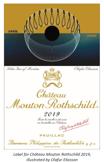
Chateau Mouton Rothschild is located in the Pauillac appellation in the Medoc of Bordeaux, France. In the 1855 classification, it shares the distinction of being a First Growth with Chateau Lafite Rothschild, Chateau Latour, Chateau Margaux and Chateau Haut-Brion. Mouton Rothschild has adopted a modern approach to winery management, employing a viticulturalist to oversee the vineyards. From the cultivation of the grapes to the pruning of the vines, from the tracking of the ripening of the grapes to the manual harvesting, everything is done to perfection. Today, Château Mouton has 90 hectares of vineyards, most of which are located on a hill called "Plateau de Mouton", at an altitude of 27 meters. The soil is deep gravel, with good drainage and heat storage, which allows the grapes to ripen slowly. The vineyard is planted with 81% Cabernet Sauvignon, 15% Merlot, 3% Cabernet Franc and 1% Petit Verdot, with a planting density of approximately 10,000 vines/ha and an average vine age of 44 years. The vineyard also contains 7 hectares of excellent plots for the production of high quality white wines, with 56% Sauvignon Blanc, 43% Semillon and 1% Muscadelle, planted at a density of 9,000 vines per hectare. During the harvest season, the grapes are picked and sorted by hand, and the carefully selected grapes are placed in fermentation vats by gravity alone through moving vats. As a result, the grapes are not subjected to any unnatural pressure or restraint and remain in their natural, pure state from the time they are harvested until they enter the fermentation vats. At the end of fermentation, the wine is transferred to new oak barrels to mature for about 20 months. In 2012, Mouton Rothschild's new winery, which combines traditional techniques with modern technology, was inaugurated. It is divided into two floors, connected by metal columns. The interior is equipped with oak barrels and stainless steel tanks of different sizes, which correspond to the different plots and varieties of the vineyard, in order to achieve a more optimal winemaking blend. Chateau Mouton Rothschild, Pauillac, France is the main wine of the estate and accounts for half of the total production. It has been praised by many critics and wine lovers for its beautiful, elegant and unique style, which is in harmony with the terroir of the region, and its artistic design of the label. In addition to the main label, the winery also has Le Petit Mouton de Mouton Rothschild, Pauillac, France (1993) and Aile d'Argent Blanc du Mouton (1991). Chateau Mouton Rothschild, Bordeaux, France). The Petit Mouton Rothschild is made from the younger vines on the estate and is harvested, vinified and bottled on the same basis as the full-length wine. The wine quickly gained a foothold in the market and was very well received. The Silver Wings dry white wine is rich, complex and elegant, and although its production is scarce, it is quickly becoming a symbol of Bordeaux's premium white wines and a favorite among wine enthusiasts.
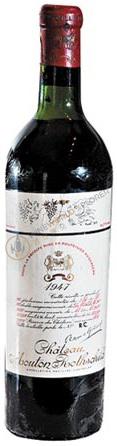
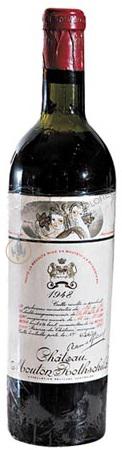
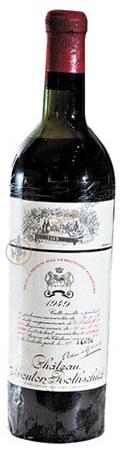
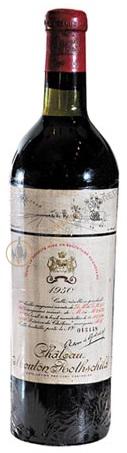
1947(2)1948(1)1950(2)1951(1)1952(1)1953(1)1954(1)1955(2)1956(1)1957(3)1958(2)1959(1)1960(1)1962(1)1963(1)1964(2)1965(1)1966(1)1967(1)1968(2)1969(2)1970(1)1971(2)1972(1)1973(3)1974(1)1975(2)1976(1)1977(2)1978(1)1979(3)1980(1)1981(1)1982(8)1983(2)1984(5)1985(5)1986(12)1987(5)1988(8)1989(8)1990(1)1991(5)1992(9)1993(6)1994(8)
Package Size