 Wine Advisor



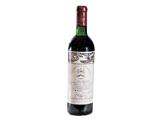
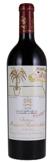
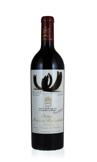
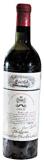
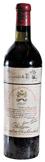
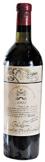
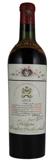
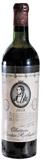
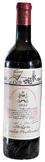
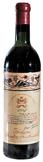
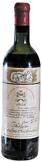
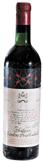
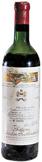
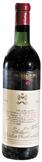
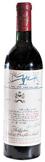
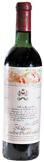
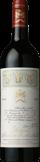
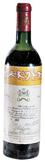
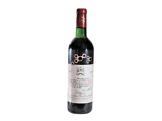
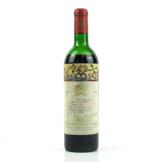
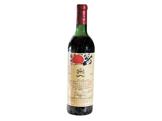
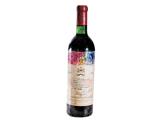
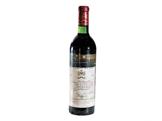
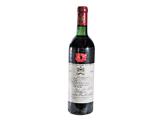
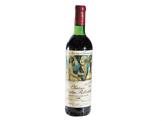
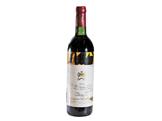
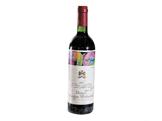
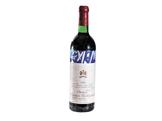
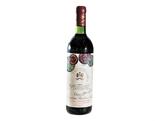
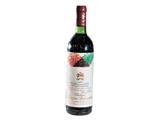
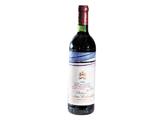
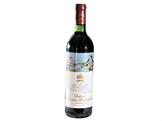
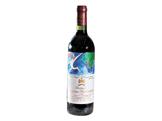
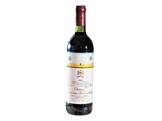
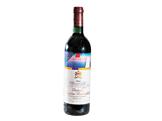
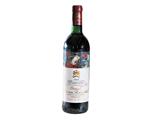
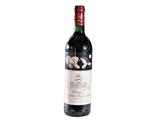
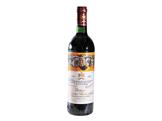
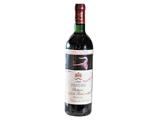
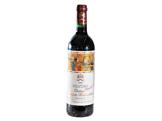
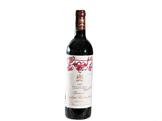
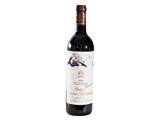
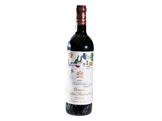
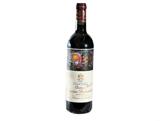
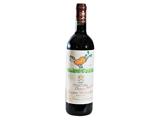
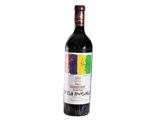
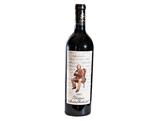
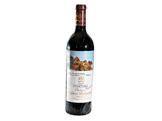
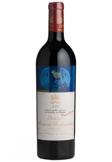
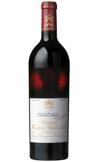
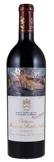
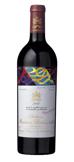
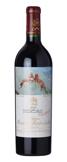
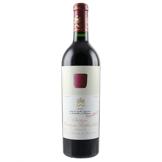
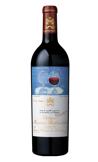
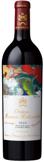
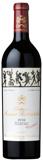
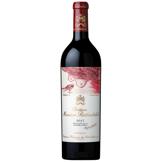
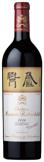
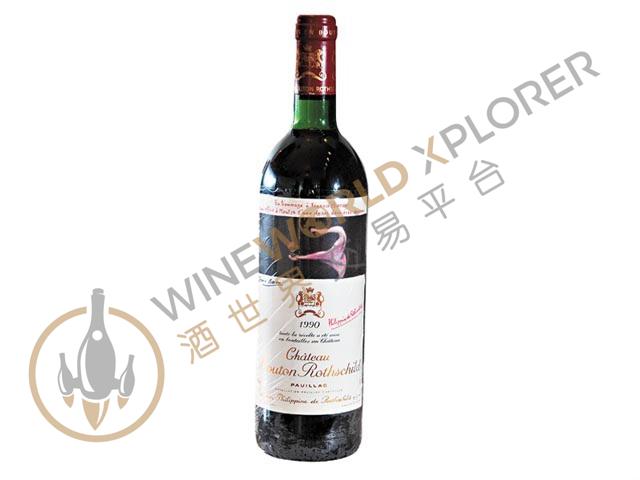
Mouton Rothschild 1990
 View analysis


Description
Formerly known as Château Brane-Mouton, it was in 1853 that Baron Nathaniel de Rothschild acquired the property located on the Left Bank in the Bordeaux region in the Médoc. From this date, the Château was renamed Château Mouton-Rothschild. Under the leadership of Baron Philippe de Rothschild, Mouton-Rothschild saw its reputation grow to become an emblem of the Pauillac appellation.
Tasting notes

Reviewed by: Robert M. Parker, Jr.
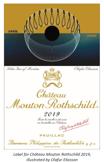
The 1990, impressive from barrel, is a disappointment from the bottle. While less evolved than the 1989, it is excessively oaky, with a Jack Daniels, whiskey barrel-like smell. Medium-bodied and somewhat hollow, it is frankly embarrassed when tasted beside the likes of Latour and Margaux. Subsequent tastings continue to reveal a certain coarseness and obvious lack of concentration. What a shame! The 1990's label by the late Francis Bacon is stunning. Anticipated maturity: 1999-2010. Last tasted, 8/93.
Reviewed by: Robert M. Parker, Jr.
For a first-growth, this is an unqualified failure. It’s hard to know what went wrong, but after numerous tastings it is clear that this is a superficial, light Mouton that is already revealing some pink around the edge. Fresh menthol-infused red and black fruit notes are present, but the wine is medium-bodied and dry with an angular, austere finish. Very disappointing. Release price: ($1500.00/case)
Reviewed by: Robert M. Parker, Jr.
The 1990, impressive from the barrel, is a disappointment from the bottle. While less evolved than the 1989, it is excessively oaky, with a Jack Daniels, whiskey barrel-like smell. It is medium-bodied, somewhat hollow, and frankly embarrassed when tasted next to the likes of Latour and Margaux. I tasted it from the bottle three times with identical impressions. What a shame! The 1990's label by the late Francis Bacon is stunning. Anticipated maturity: 1999-2010.
Reviewed by: Lisa Perrotti-Brown
Notorious for not living up to the estate’s nor the vintage’s reputations, I have to say this 1990 Mouton Rothschild was not looking nearly as bad as I was expecting. This was a hot, dry vintage, which can be a challenge for vines on such free-draining soils as the deep gravel-mounds composing the backbone of Mouton’s vineyards. The effect of the struggling vines is apparent in the wine, yielding less density and chewier tannins. Nonetheless, the terroir's pedigree clearly glimmers in the background. The wine displays a brick color with subtle, compellingly elegant redcurrant jelly, dried cranberries and powdered cinnamon notes plus wafts of potpourri, dried figs, unsmoked cigars and dusty soil. Medium-bodied, it is notably far more delicately fruited than one would expect of Mouton, structured with bold freshness and a light chew of tannins before finishing on a mineral note. Indeed, it is skinny compared to great vintages, but it is aging gracefully. For readers who love those soft-spoken, more delicately expressed styles, this one’s for you!
Reviewed by: Neal Martin
First tasting in 2001 when this wine was quite open on the nose with soft raspberries and leather. But the palate is below-par and green stemmy notes spoil the wine. A bit lean with little depth. Surprisingly poor for Mouton. Then September 2004 at the Farr 89 versus 90 tasting. Well, I did not expect anything more from this wine which I have tasted several times now. Slightly vegetal on the nose. There is a hole on the mid-palate, quite dry and lacking concentration. This is not even in the Super-Second category. How could it have gone so wrong? Mouton 1990: like the Cheeky Girls covering Pet Sounds.
Reviewed by: Robert M. Parker, Jr.
Considering the vintages and the estate, Mouton's performances in 1989 and 1990 are puzzling. I have tasted these wines multiple times since my last reviews appeared in print. The 1990 is a hard, lean, austere, tannic style of Mouton that I predict will never shed enough tannin to attain complete harmony and balance. The wine exhibits a deep ruby color, less noticeable sweet oak than it possessed 2-3 years ago, hints of ripe blackcurrant fruit, and an attenuated, angular, tough style that is uncharacteristic of this chateau's winemaking, as well as the character of the 1990 vintage. This wine needs at least 10-15 years of cellaring, but don't expect a balanced Mouton when the tannin fades away - the wine is not that concentrated. In the context of a great vintage, Mouton's 1990 is a disappointment. Anticipated maturity: 2006-2020.
Reviewed by: Robert M. Parker, Jr.
The 1990 gets my nod as one of the three best Moutons since the great 1959 - the others being the 1982 and 1986. It is much more concentrated, backward, and less evolved than the 1989, and it is also less aggressively, or should I say excessively oaky than its predecessor. But for the long-term, there is more glycerin and concentration, and the finish is sweeter and longer in the 1990. The 1989 should drink well at an earlier age given its 1985-ish personality, whereas the 1990 is more of a long distance runner. This great Mouton is one of the most complete wines of the vintage. Anticipated maturity: 2000-2025. P.S. The Maitre de Chais, Michel Bosq, continues to agree that the 1990 is superior to the 1989, largely because their crop-thinning efforts were more severe in 1990.
Reviewed by: Robert M. Parker, Jr.
I have had numerous opportunities over the last six months to re-evaluate the 1990, which I thought was stunning from cask, but frightfully tannic and hard from bottle, where I rated it 87. Tasted both stateside and at the chateau with Philippe Cottin in November, the 1990 appears to be putting on some weight, although it still comes across as narrowly constructed and very tannic, hard, and backward. At present I would rate it 88-89+. I am glad to see that Monsieur Cottin agrees the wine is not flattering to taste and has gone into a shell since bottling. Several subscribers have written to say the wine is being discounted significantly by retailers aggressively trying to move stocks of this wine. For readers with 10-15 years of patience, the 1990 Mouton-Rothschild may regain the form I predicted for it prior to bottling, but at this stage the harshness of the tannin still gives me cause for concern.
Reviewed by: Neal Martin
This has always been a disappointing Mouton considering the vintage, although this is probably the best bottle, poured at La Paulee in Meursault. It remains rather lean and stalky on the nose, dry on the palate entry with notes of blackberry leaf and mulberry, with touches of tobacco. It is better balanced than I recall, yet it lacks vigour and backbone, as if it is unwilling to go that extra mile and reach the level one expects of Mouton. Not as hollow as other bottles but remaining leafy on the foursquare finish with moderate length, I would definitely opt for the superior ’89. Drink now-2015. Tasted November 2008.
Reviewed by: Ian d'Agata
(81% cabernet sauvignon, 10% cabernet franc, and 9% merlot; pH 3.69; IPT 60; 12.2% alcohol; 76% new oak; a 79% selection): Bright red with a pale rim. Knockout nose of aromatic herbs, strawberry, sweet spices and acacia flower; yet another wine strongly marked by its cabernet franc presence. Fresh and vibrant, this absolutely dances on the palate with strawberry, sour red cherry and raspberry flavors complicated by gunflint and herbs. High acidity provides great clarity and cut to the long, floral, smoothly tannic finish. This has improved considerably with bottle age. Harvested from September 18 through October 3, this Mouton offers amazing balance and fragrance. In 1990 Mouton was still using a heavy toast for its barriques, which resulted in a smoky quality in the wines that was considered by many to be just as typical of Mouton as its opulence. But we began turning things back in 1993, as we saw that our 1992 was a little unbalanced from the use of heavily toasted barrels, said Tourbier remarks. 94.
Reviewed by: Neal Martin
The 1990 Mouton-Rothschild has always been a rather disappointing First Growth, and despite the perfect provenance of this ex-château bottle, its juxtaposition against the 1996 does it no favors. It has an earthy, loose-knit, tobacco-stained bouquet that never clicks out of second gear. The palate is similar, reasonably well balanced but lacking cohesion and, in particular, missing weight on the midpalate. It is a 1990 that struggles with expectation and falls short. Tasted from an ex-château jeroboam at the Palace of Versailles charity dinner.
Reviewed by: Stephen Tanzer
Full, deep red. Knockout smoky nose of cedar, leather, earth, truffle and game. Then rather tightly coiled and far less pliant than the nose would suggest. Strong acids contribute to this wine rather powerful structure. But I don't find the flesh shown by the best wines from this vintage. Finishes quite firm, youthfully backward and persistent. Still needs considerable bottle aging, but will this ever be truly satisfying? Drink 2010 to 2025.
Reviewed by: Stephen Tanzer
A major disappointment, given the depth this wine showed out of barrel. Medium color. Complex aromas of lead pencil, coffee, new oak and meat. Quite backward on the palate; seems tough and a bit thin today because there is not enough buffering extract. Has the structure to age and will improve in the cellar, but this leaner-styled '90 will never be great.
About the Producer
Chateau Mouton Rothschild is located in the Pauillac appellation in the Medoc of Bordeaux, France. In the 1855 classification, it shares the distinction of being a First Growth with Chateau Lafite Rothschild, Chateau Latour, Chateau Margaux and Chateau Haut-Brion. Mouton Rothschild has adopted a modern approach to winery management, employing a viticulturalist to oversee the vineyards. From the cultivation of the grapes to the pruning of the vines, from the tracking of the ripening of the grapes to the manual harvesting, everything is done to perfection. Today, Château Mouton has 90 hectares of vineyards, most of which are located on a hill called "Plateau de Mouton", at an altitude of 27 meters. The soil is deep gravel, with good drainage and heat storage, which allows the grapes to ripen slowly. The vineyard is planted with 81% Cabernet Sauvignon, 15% Merlot, 3% Cabernet Franc and 1% Petit Verdot, with a planting density of approximately 10,000 vines/ha and an average vine age of 44 years. The vineyard also contains 7 hectares of excellent plots for the production of high quality white wines, with 56% Sauvignon Blanc, 43% Semillon and 1% Muscadelle, planted at a density of 9,000 vines per hectare. During the harvest season, the grapes are picked and sorted by hand, and the carefully selected grapes are placed in fermentation vats by gravity alone through moving vats. As a result, the grapes are not subjected to any unnatural pressure or restraint and remain in their natural, pure state from the time they are harvested until they enter the fermentation vats. At the end of fermentation, the wine is transferred to new oak barrels to mature for about 20 months. In 2012, Mouton Rothschild's new winery, which combines traditional techniques with modern technology, was inaugurated. It is divided into two floors, connected by metal columns. The interior is equipped with oak barrels and stainless steel tanks of different sizes, which correspond to the different plots and varieties of the vineyard, in order to achieve a more optimal winemaking blend. Chateau Mouton Rothschild, Pauillac, France is the main wine of the estate and accounts for half of the total production. It has been praised by many critics and wine lovers for its beautiful, elegant and unique style, which is in harmony with the terroir of the region, and its artistic design of the label. In addition to the main label, the winery also has Le Petit Mouton de Mouton Rothschild, Pauillac, France (1993) and Aile d'Argent Blanc du Mouton (1991). Chateau Mouton Rothschild, Bordeaux, France). The Petit Mouton Rothschild is made from the younger vines on the estate and is harvested, vinified and bottled on the same basis as the full-length wine. The wine quickly gained a foothold in the market and was very well received. The Silver Wings dry white wine is rich, complex and elegant, and although its production is scarce, it is quickly becoming a symbol of Bordeaux's premium white wines and a favorite among wine enthusiasts.
1947(2)1948(1)1950(2)1951(1)1952(1)1953(1)1954(1)1955(2)1956(1)1957(3)1958(2)1959(1)1960(1)1962(1)1963(1)1964(2)1965(1)1966(1)1967(1)1968(2)1969(2)1970(1)1971(2)1972(1)1973(3)1974(1)1975(2)1976(1)1977(2)1978(1)1979(3)1980(1)1981(1)1982(8)1983(2)1984(5)1985(5)1986(12)1987(5)1988(8)1989(8)
Package Size