 Wine Advisor



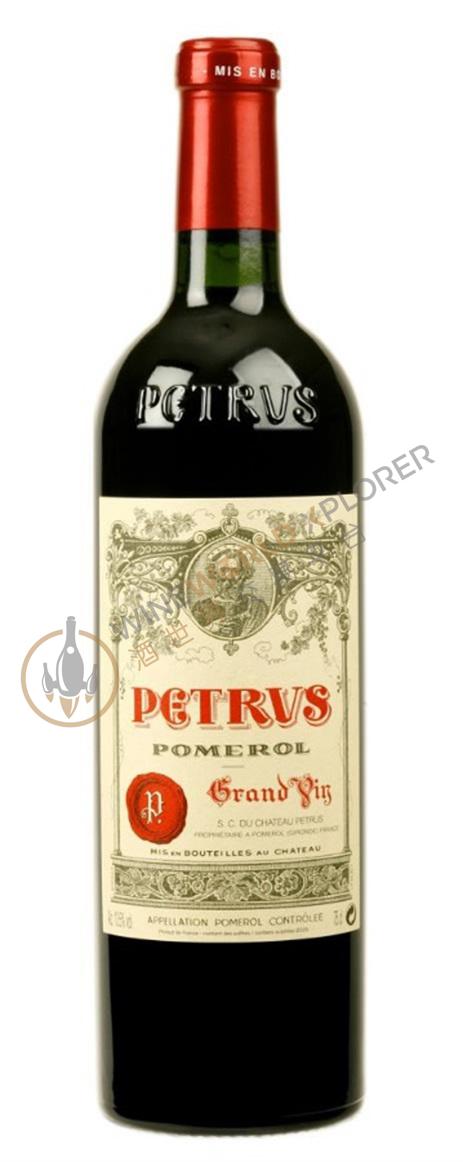
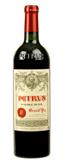
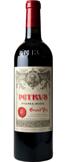
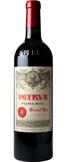
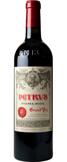
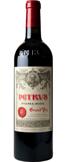
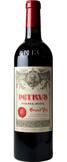
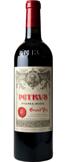
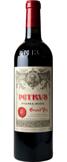
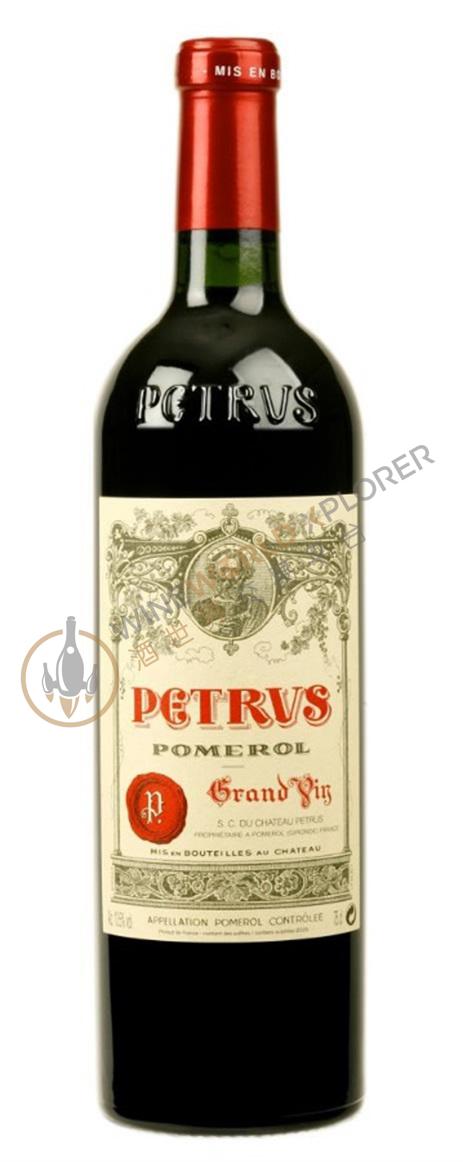
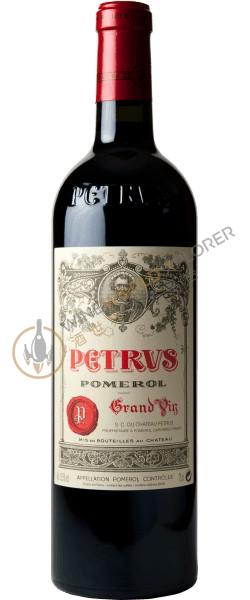
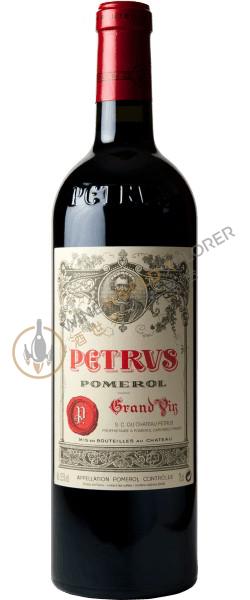
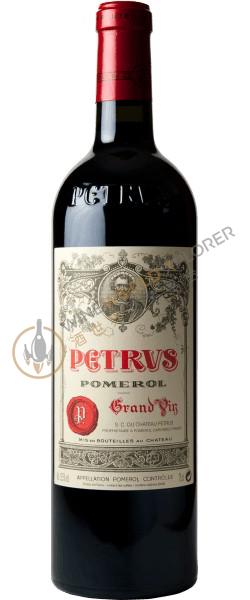
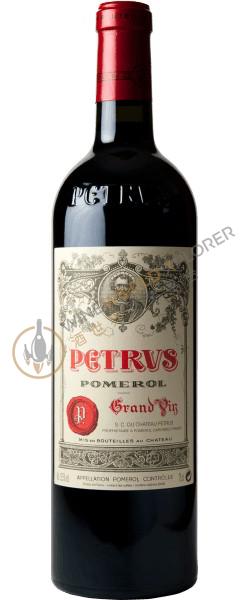
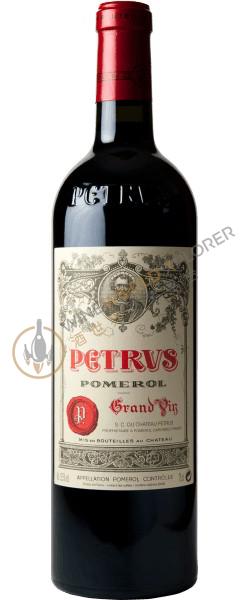
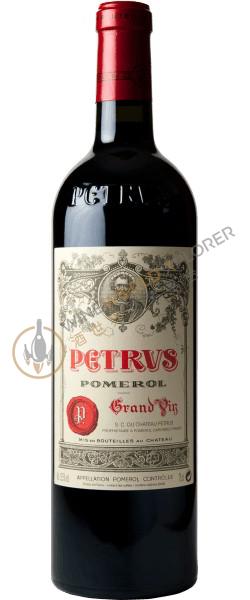
Petrus 1999
 View analysis


Description
Petrus is made almost entirely of Merlot grapes grown in Bordeaux's right bank Pomerol appellation. Although never officially classified, the chateau has long been considered on par with the First Growths from the left bank. The ownership of the estate has passed between the Arnaud family in the 19th century, to Madame Loubat at the end of WWII, and finally to Jean-Pierre Moueix in recent years. Petrus's clay soil is rich in iron and the estate's average vine age is 40 years. Chateau Petrus produces approximately 3,000 cases of wine each year.
Tasting notes

Reviewed by: Robert M. Parker, Jr.
It will be a decade before it will be decided whether Lafleur or Petrus made the most successful 1999 Pomerol. There are 2,500 cases of this top-notch effort as opposed to the normal 4,000+. As usual, Christian Moueix, always a pessimist, talks down the wine, but he has admirably succeeded in turning out another deep purple-colored, long-lived, super-concentrated Pomerol that will require 5-6 years of cellaring. Revealing copious quantities of plum, black cherry, and mulberry-like fruit, it is a rich, deep, full-bodied effort with sweet tannin as well as a firm structure. Four to five years ... minimum ... of cellaring will be required. A top-flight Petrus. Anticipated maturity: 2006-2025.
Reviewed by: Neal Martin
A similar colour to the 2000 but the nose is a different animal: less fruit concentration, a little gun-smoke a pain grille. The palate has moderate concentration though lacks a little harmony at the moment. It has a smoky character with that burnt toast coming through on the mid-palate. Quite rigid, not appealing at the moment and certainly dwarfed by its neighbouring vintage. I cannot quite envisage how this will develop but it will be interesting. Tasted January 2004.
Reviewed by: Robert M. Parker, Jr.
Despite Christian Moueix's modesty, the 2,400 cases of 1999 Petrus will provide gorgeous drinking for the multi-millionaires who can afford it. Opaque ruby/purple-colored, with sweet black cherry, mulberry, and smoky, truffle-infused fruit, this full-bodied, opulent effort will be drinkable at an early age. It is beautifully knit, with great purity, and superb concentration and overall symmetry. Anticipated maturity: 2005-2025.
Reviewed by: Neal Martin
Tasted at the 1999 horizontal at Bordeaux Index. This has a lucid garnet core. The bouquet is tightly coiled, scents of raspberry, wild strawberry, a touch of lavender, cooked meats, soy and wild mint. The palate is medium-bodied, rounded and quite sensuous on the entry, a slight ferrous, very elegant towards the finish that has very fine persistency. Not a great Petrus vis-a-vis other vintages, but a decent Pomerol, a Petrus that plays it safe. Drink now-2020. Tasted June 2009.
Reviewed by: Neal Martin
Purloined from the hand of one Anthony Hanson MW at La Paulee in Meursault! This has a lovely, “soft” nose with mulberry, all spice, smoke and earth, perhaps a little more forward than I would like but more harmonious that in 2004. The palate has a soft entry and is very approachable, leathery red-berried fruit, lacking a little backbone but fanning out into a very attractive tertiary finish. If I was going to quibble, it a. lacks a little personality after nine years and b. is not as good as Le Pin! Drink now-2020. Tasted November 2008.
Reviewed by: Robert M. Parker, Jr.
This wine is turning out much in the style of such wonderful Petrus vintages as 1967 and 1971. Although not as outstanding as either the 1998 or 2000, it displays beautiful intensity and finesse in a more evolved style than one normally expects from this estate. The wine has a dense, nearly opaque ruby/purple color, sweet black cherry, mulberry, truffle-infused fruit, full body, low acidity, admirable purity, and sweet tannin. It should be ready to drink in 5-6 years, and will last for two decades. Anticipated maturity: 2007-2030. Only 2,400 cases were produced.
Reviewed by: Neal Martin
The 1999 Petrus was made by Jean-Claude Berrouet (his son Olivier was training at Haut-Brion at the time) and harvest was in early September. This has the best aromatics of any Pomerol that I have tasted alongside Lafleur, featuring lovely red berry fruit and black truffle, almost Burgundian in style and beautifully defined. The palate is medium-bodied with plenty of freshness and definition, touches of black truffle and sage infusing the red fruit. Perhaps the limitations of the growing season impinge upon the finish, which feels a little conservative in style, but this still ranks among the better Pomerols of the vintage. “Fine and delicate,” Oliver Berrouet remarked during the tasting, and I concur. Tasted from an ex-château bottle at the estate.
Reviewed by: Neal Martin
The 1999 Petrus is serviceable but shrinks like a violet – the words taken from my Pomerol tome. Of three or four bottles tasted it has a decent wild strawberry and balsamic-tinged bouquet whilst the palate initially conveys some sensuality, quite elegant and fans out nicely. I admire many Pomerol wines in this off-vintage, although in this year I believe that Lafleur made a better wine. Taken from the Pomerol book.
Reviewed by: Stephen Tanzer
Full ruby-red. Cool, brooding aromas of blackberry liqueur, violet, smoke and minerals. Concentrated, densely packed, minerally and precise; brisk acids contribute to the impression of coolness. Firm, youthfully austere finish. Not as lush or open today as the Lafleur, but this is longer on the aftertaste. I'm not sure I would have picked this blind as a '99.
Reviewed by: Stephen Tanzer
Medium ruby-red. Perfumed red cherry, mulberry, iron, licorice and mint on the classy nose; ripe but without the liqueur-like quality of the '98. Sweet, fresh and deep, with penetrating ripe acids giving the wine lovely inner-mouth aromatics. Thick but bright and firm. Strongest today on the back end, which features suave tannins and very persistent fruit. This will offer early accessibility but has the structure for intermediate-term aging.
About the Producer
The Patus winery has 11.5 hectares of vineyards. The top layer of the soil in the garden is pure clay, the bottom layer is terracotta, and the deeper layer is lime soil with high iron content, and has a good drainage system. The grape varieties planted are mainly Merlot, accounting for about 95%; the remaining 5% is Cabernet Franc. Because Cabernet Franc matures earlier, unless the vintage is particularly good, Patux winery is generally not used for winemaking. The planting density is 6,000 trees per hectare, and the average age of the trees is around 40 years, and some are even 80 years old. The operator adopts a more traditional method in the renewal of the vineyard, that is, through the selection, the best quality grape vine is used as the "mother plant", which is the same as the method when the Chateau Conti eradicated the old roots in 1946. The vineyard also adopts strict "fruit control". Each plant retains several bud eyes, and each bud eye leaves only one bunch of grapes. The goal is to fully ripen, but avoid over-ripening, otherwise it will affect the delicate flavor of the wine. In terms of the brewing process, Chateau Patus set the grape harvest time in the afternoon, the purpose is to let the morning sun dry the residual dew from the previous night. Each harvest employs 180 harvesters and takes about half a day to complete 2 to 3 harvests. During the brewing, Patus Winery spared no expense, replacing the wooden barrels (of different materials) every 3 months, and the aging time is about 20-22 months. Patus winery attaches great importance to quality and only selects the best grapes. In some bad years, such as 1991, it even stops production. The average annual output of Chateau Patus is no more than 30,000 bottles, which is extremely limited and expensive. Petrus, Pomerol, France is dark in color and has a delicate and rich aroma. Among the aromas of blackcurrant and mint, there are also many aromas such as blackberry, cream, chocolate, truffle, milk and oak. The taste is silky Slippery, long aftertaste.
1950(1)1964(1)1966(1)1969(1)1970(1)1971(1)1975(2)1976(1)1978(1)1979(1)1980(2)1981(3)1982(5)1983(4)1985(4)1986(3)1987(3)1988(8)1989(6)1990(7)1992(1)1993(4)1994(7)1995(6)1996(5)1997(6)1998(11)
Package Size