
 Wine Advisor



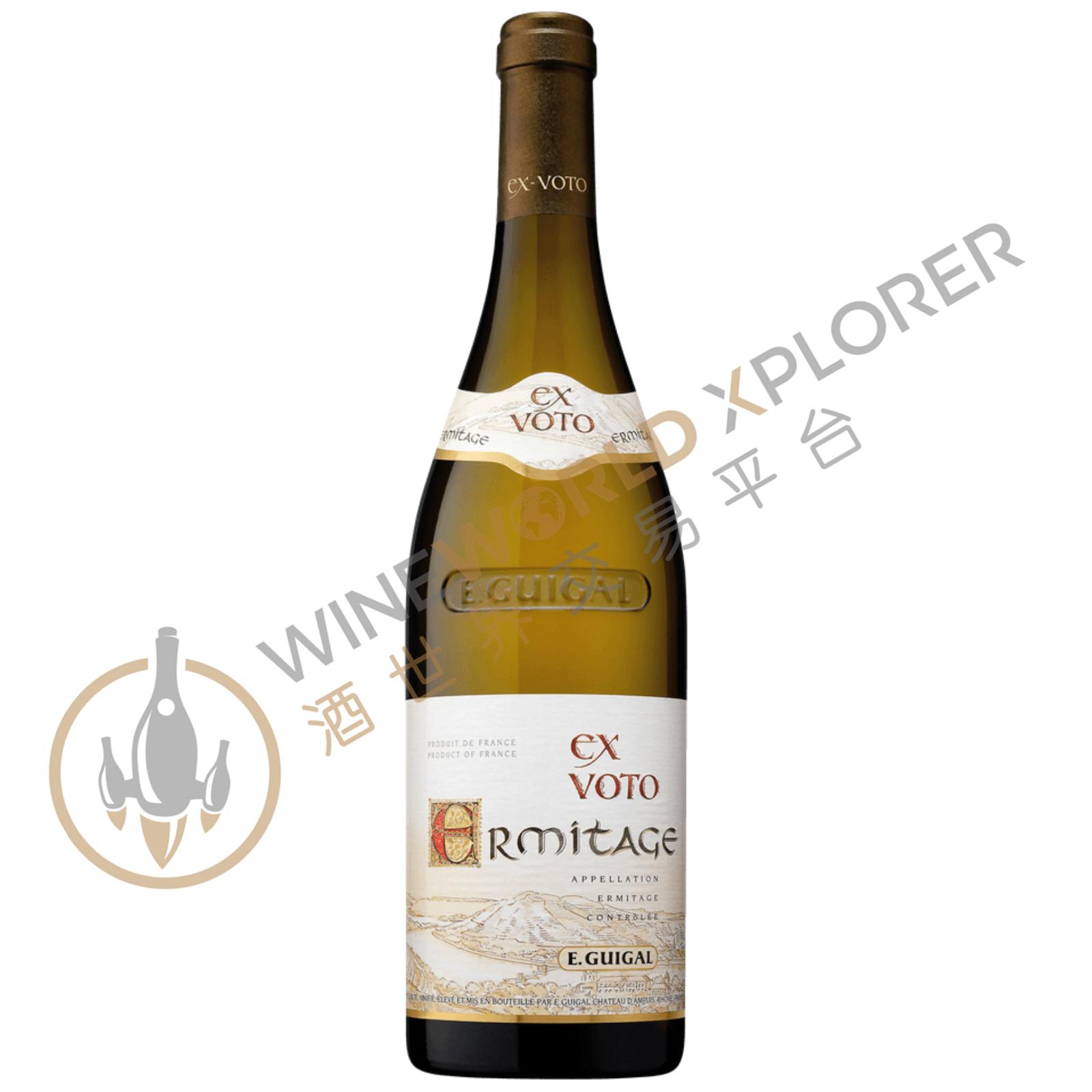
Etienne Guigal, Ermitage Ex-Voto Blanc 2009
 View analysis


Description
L'Ermitage「Ex-Voto」白酒僅在特殊年份生產。它具有非常豐富的香氣和複雜性。鼻子中充滿了合歡花、蜂蜜和烤香的味道。
Tasting notes

Reviewed by: Jeb Dunnuck
Like the 2010, the 2009 Hermitage Ex Voto Blanc is an utterly perfect wine, and I finished my note during the tasting with “the best white wine I’ve ever tasted?”. More unctuous, thick and flamboyant than the more reserved and mineral-laced 2010, it has soaring aromatics of caramelized peach, brioche, white flowers and orange marmalade. These flow to a full-bodied, huge white that packs incredible richness and depth, yet still glides across the palate with no weight or heaviness. This is truly heavenly juice that I wish every reader could taste!
Reviewed by: Robert M. Parker, Jr.
Finally in bottle, the 2009 Hermitage Ex-Voto Blanc is an incredible example of white Hermitage. Made in a more spicy, oaky style than either Michel Chapoutier’s or Delas’ white Hermitage, the Ex-Voto exhibits tremendous richness and intensity with plenty of buttery citrus, a subtle touch of spicy oak, honeysuckle, spring flowers and orange marmalade. Deep, rich and full-bodied with a greenish hue to its color, this viscous effort will probably follow the typical pattern of white Hermitage, drinking great for 5-7 years, then going into a dumb, oxidative state for 5-10 years, re-emerging to last 50+ years. The Guigal family may be the modern world’s greatest testament to a family-run winery with impeccably high standards, integrity and an uncompromising vision of the future. They continue to push the envelope of quality to greater and greater heights. Marcel Guigal learned it all from his father, Etienne, a legend in the Northern Rhone. Over my three decade plus career, it has been a noteworthy story to watch Marcel’s son, Philippe, take full responsibility for the future direction of this incredible enterprise, if not empire. I have almost unlimited admiration for the Guigals and their ability to produce millions of bottles of inexpensive Cotes du Rhones that are among the finest of the entire Rhone Valley, as well as their portfolio of exquisite whites, reds and roses from the most prestigious appellations in the Rhone. After more than three decades of tasting here, I never cease to be amazed by what they accomplish. I have said this many, many times, but it bears repeating – the magic of the Guigals is not only due to having some extraordinary vineyards in St.-Joseph, Hermitage, Cote Rotie and Condrieu, but also the ability to pay the highest price for purchased grapes and/or wine from which they fashion remarkable blends. The importance of a wine’s upbringing (or, as the French call it, elevage) is the key to understanding the entire Guigal locomotive. No one does it better; no one has done it longer; and no one seems to have the Midas touch for putting the wines in the bottle at precisely the right moment to capture the essence of a wine before it begins to fade or lose its vibrancy. This may sound easy, but to date, no one comes remotely close to what the Guigals consistently do across all fields of play. About a decade ago, Guigal’s white wines began to take on an amazing level of quality and the family continues to augment and increase that quality. Their Cotes du Rhone Blanc, usually a blend of two-thirds Viognier and the rest Clairette and Bourboulenc, has become a reference point for what amazing value and high quality can be achieved in a completely naked, expressive wine. Guigal produces approximately 40% of all the Condrieu made, and he continues to add some exquisite terroirs to his portfolio. For example, he recently bought the vineyard owned by Alain Parent and Gerard Depardieu, Lys de Volant. Guigal can produce two cuvees of white Hermitage, their regular blend of 90% Marsanne and 10% Roussanne, and, in exceptional vintages, a luxury cuvee called Ex-Voto, which is approximately 80% Marsanne and 20% Roussanne. It spends more time in small new oak than the regular cuvee. From the Northern Rhone, Guigal’s finest values are his Crozes-Hermitage and his lower level cuvees of St.-Joseph, all of which are 100% Syrah. The Crozes-Hermitage comes from hillside vineyards and the St.-Joseph comes from hillsides with decomposed granite soils that are commonplace in the northern half of that sprawling appellation. There are three cuvees of St.-Joseph, the generic St.-Joseph, the Lieu-Dit St.-Joseph (which comes from estate vineyards), and one of the greatest wines of the appellation, the St.-Joseph Vignes de l’Hospice, an extremely steep, photogenic site that towers above the town of Tournon, across the Rhone River from Tain L’Hermitage. With the purchase of the estates of Jean-Louis Grippat as well as the holdings of De Vallouit, Guigal increased his estate vineyards in Hermitage. A basic Hermitage cuvee is produced each year, and in the top vintages, a luxury cuvee called Ex-Voto is made. Guigal now owns vineyards in the famed lieux-dits of Les Bessards, Dionnieres, l’Ermite and Le Meal. The regular Hermitage is generally aged for up to three years in small oak casks, about 50% new. When declared, the Ex-Voto is given the same 42 months in 100% new French oak as his three single vineyard Cote Roties (La Mouline, La Landonne and La Turque). The Ex-Voto is a blend of fruit from Les Bessards (40%), Les Greffieux (40%) and Les Murets (20%). Guigal produces approximately 300,000 bottles each year of his Cote Rotie Brune et Blonde. We started with the 2008, probably the second worst vintage in the Northern Rhone (2002 being the worst in the last decade). Not a single vineyard wine, but a prodigious Cote Rotie is Guigal’s Cote Rotie Chateau d’Ampuis. Marcel Guigal’s son, Philippe, lives at this estate with his wife and children, and this is also where they cooper their wood barrels made from staves that are air-dried a minimum of three years. This cuvee is always a blend of some of the finest parcels on the hillsides of Cote Rotie, including La Garde, Le Clos, Grande-Plantee, Pommiere, Pavillon, Le Moulin and La Viria. It is aged 38 months in 100% new French oak, and around 2,000 cases are produced in most vintages. The three single vineyard Cote Roties are consistently among the world’s greatest wines. I often find La Mouline to be a so-called “desert island” wine as it was in vintages such as 1978, 1983, 1985, 1988, 1989, 1991, 1999, 2003, 2005 and 2009. La Mouline is made from the oldest vines and is vinified differently than the other single vineyard cuvees, utilizing pump-over techniques as opposed to punching down (La Turque) or immersed cap (La Landonne). To reiterate, the Cote Rotie La Turque comes from the Cote Brune and its upbringing is the same as La Mouline’s, aged 42 months in 100% new French oak, co-fermented with 5-7% Viognier, and bottled unfined and unfiltered. It comes from younger vines as the first vintage was 1985 and that remarkable wine was made from 3-year-old vines (which puts a kink in the French myth that old vines are always the best). As I previously indicated, La Turque is vinified by punching down as opposed to pumping over or the immersed cap fermentation of La Landonne. The third of these prodigious Cote Roties, La Landonne, comes from the Cote Brune. Unlike its siblings, it is 100% Syrah that receives the same upbringing, 42 months in 100% new French oak and bottling with no fining or filtration. The other luxury cuvee, although not a single vineyard wine, is the Hermitage Ex-Voto, which is aged 42 months in 100% new oak and bottled unfined and unfiltered. It is always fashioned from Les Bessards (40%), Les Greffieux (40%), Les Murets (10%) and l’Ermite (10%). The Gigondas and Chateauneuf du Pape produced by Guigal are often excellent, even outstanding wines that sell for a fraction of the price asked for his luxury cuvees of Cote Rotie, Hermitage, Condrieu and St.-Joseph. Guigal’s Gigondas spends around 24-25 months in wood foudres, and includes a great deal of Mourvedre in the blend. The Chateauneuf du Pape, which comes from purchased wine, is aged two years in foudre prior to release. Guigal normally includes a minimum of 10% Mourvedre in the blend, with the balance old vine Grenache. As I have said many times, one of these days the Guigals will purchase a famous estate in Chateauneuf du Pape because Marcel’s father, Etienne, had always said the three greatest appellations of the Rhone Valley were Cote Rotie, Hermitage and Chateauneuf du Pape (few people would disagree). Importer: Vintus Wines, Pleasantville, NY; tel. (914) 769-3000
Reviewed by: Robert M. Parker, Jr.
The 2009 Hermitage Ex-Voto blanc offers extraordinary aromas and flavors of spring flowers, caramelized oranges, nectarines and other citrus, an underlying unctuosity, massive honeyed richness, great intensity, a multidimensional mouthfeel and a long finish. It is capable of lasting for five decades. (Not yet released) The following paragraph is taken from issue #193, but I believe it is so important to understand the Guigal philosophy that I am repeating it verbatim. “As I have written many times before, no one in the wine world is better at ‘raising’ a wine (or as the French call it elevage) than Marcel Guigal, who learned the skills from his father, Etienne. Because everyone tends to focus on vintage conditions and terroir, the importance of a wine’s elevage is often overlooked, but Guigal’s unusually long tank, foudre and small barrel aging regime for all his red wines as well as several of his whites results in an array of remarkable wines time and time again. Even the most challenging vintages, which often taste under-nourished, vegetal and thin in their first year or two of life, tend to take on concentration and character, turning out to be some of the finest wines in many of the most difficult Rhone vintages. Moreover, Guigal’s wines always taste better out of bottle than from barrel, which speaks to his honesty and integrity as well as to his brilliance in deciding how long to age a wine in wood or tank, as well as choosing the perfect moment to bottle it. None of this is as simple as it might sound, and that’s why Marcel Guigal gets my vote as the reigning genius in terms of the upbringing of his wines.” Crozes-Hermitage has become one of the Guigal “go-to” wines for value hunters and he has raised the level of this humble appellation dramatically with his recent efforts. Guigal has become a master of red and white St.-Joseph, producing separate cuvees, all of which are usually stunning. Guigal is the appellation’s largest producer of Condrieu. All of his Condrieus are put through 100% malolactic, with his basic cuvee aged in stainless steel (66%) and small oak barrels (34%). Guigal also excels with white Hermitage. In truly great vintages he also produces a limited cuvee called Ex-Voto, which is a blend of 95% Marsanne and 5% Roussanne from two of the most renowned sectors for Hermitage, l’Ermite and Les Murets. Along with Michel Chapoutier’s St.-Joseph Les Granits, Guigal’s St.-Joseph Vignes de l’Hospice is the top wine of the appellation. Guigal purchased this 8-acre parcel of steep hillside vines from Grippat. Aged 30 months in 100% new oak, this wine is extraordinary. Guigal claims the soil is reminiscent of Les Bessards Vineyard in Hermitage Over the last decade, Guigal has dramatically increased his vineyard holdings in Hermitage, purchasing the estates of Jean-Louis Grippat as well as the Hermitage holdings of De Vallouit. He now has parcels in such famed vineyards as Le Meal, Les Beaumes, Les Bessards and Dionnieres. Guigal’s basic red Hermitage (which has been made for over five decades) is generally aged for more than three years in small casks, of which about 45% are new. In exceptional vintages, Guigal will cull out a special cuvee called Ex-Voto, which is aged 42 months in 100% new French oak. One thousand cases are usually made from three separate vineyards (40% from Les Bessards, 40% from Les Greffieux and 20% from Les Murets.) Importer: Vintus Wines, Pleasantville, NY; tel. (914) 769-3000
Reviewed by: Robert M. Parker, Jr.
A barrel sample of the 2009 Hermitage Ex-Voto Blanc is sensational. Notes of powdered rock, anise, intense honeyed citrus, tropical fruit and quince along with lively acids and massive concentration suggest this 2009 will be a long distance runner and confirms the greatness of this vintage. Fat and unctuous, it should be approachable young, but last for 2+ decades. (Not yet released) As I have written many times before, no one in the wine world is better at “raising” a wine (or as the French call it elevage) than Marcel Guigal, who learned the skills from his father, Etienne. Because everyone tends to focus on vintage conditions and terroir, the importance of a wine’s elevage is often overlooked, but Guigal’s unusually long tank, foudre and small barrel aging regime for all his red wines as well as several of his whites results in an array of remarkable wines time and time again. Even the most challenging vintages, which often taste under-nourished, vegetal and thin in their first year or two of life, tend to take on concentration and character, turning out to be some of the finest wines in many of the most difficult Rhone vintages. Moreover, Guigal’s wines always taste better out of bottle than from barrel, which speaks to his honesty and integrity as well as to his brilliance in deciding how long to age a wine in wood or tank as well as choosing the perfect moment to bottle it. None of this is as simple as it might sound, and that’s why Marcel Guigal gets my vote as the reigning genius in terms the upbringing his wines. For ten to twelve years after my first visit to this estate in the late 1970s, I tended to think of Guigal as primarily a red wine specialist. I still believe the red wines are the heart and soul of Maison Guigal, but the quality of the white wines has gone from strength to strength over the last few decades, and the Guigal family now routinely produces some of the finest dry whites of the entire Rhone Valley, including their humble Cotes du Rhone, and more particularly their white cuvees of Crozes-Hermitage, St.-Joseph, Hermitage and Condrieu. They produce more of the latter wine than any other proprietor of this tiny appellation. Guigal’s 2008 whites have turned out surprisingly strong. There is widespread agreement that the greatest terroir of the large appellation of St.-Joseph is the 8-acre parcel high on the steep hillsides above the city of Tournon. With a south/southeast facing exposition overlooking the Rhone River and Tain l’Hermitage, this 8-acre site is Guigal’s famous Vignes de l’Hospice St.-Joseph. This vineyard is composed of fragmented granite soils that are similar to the famed Les Bessards on the other side of the river in Hermitage. Unfortunately, only 500 or so cases of the Vignes de l’Hospice emerge from this vineyard. Along with Chapoutier’s St.-Joseph Les Granits, it is always one of the St.-Josephs of the appellation. The Vignes de l’Hospice spends 30 months in small new oak casks, but one would never know that when smelling or tasting it. I admire what Guigal is doing with his two white wines from St.-Joseph. The generic St.-Joseph is always 95% Marsanne and 5% Roussanne aged in stainless steel (50%), new oak (25%) and neutral oak (25%). The special 1,000 case cuvee of St.-Joseph Lieu-Dit St.-Joseph is composed of 93% Marsanne and 7% Roussanne from a 5-acre parcel, and is aged in 100% new oak. In top vintages, Guigal produces two cuvees of white Hermitage, the generic offering and the limited production Hermitage called Ex-Voto, a blend of 95% Marsanne and 5% Roussanne from two of the great sites for white Hermitage, Les Murets and l’Ermite. No Ex-Voto was made in 2008 as it was blended with the regular white Hermitage. These wines spend a number of years in small French oak. Guigal’s red wines possess some of the lowest sulphur dioxide levels of any finished wines I have ever tasted. Most of them are approximately 10 ppm (parts per million) total SO2, which is virtually nothing. That said, the wines always age incredibly well, which goes back to Guigal’s brilliant, patient, long-term barrel, tank and foudre aging. The current value picks in Guigal’s red wine portfolio are his Crozes-Hermitage (one offering made) and his three St.-Joseph cuvees. Readers looking for over-the-top richness and 40-50 years of aging potential should check out the special cuvee Ex-Voto. There are usually around 1,000 cases of this old vine blend from Les Bessards (40%), Les Greffieux (40%) and the balance primarily from Les Murets. Hermitage has been made by the Guigal firm for over 50 years. The quality of the wines has gotten dramatically better with the acquisition of top vineyard sites from producers such as Jean-Louis Grippat and the De Vallouit family. This has allowed Guigal to add holdings from such famed lieux-dits as Le Meal, Beaumes, Les Bessards and Dionnieres. In most vintages, the regular Hermitage is aged 3 years in cask of which 45% is new French oak. The special cuvee called Hermitage Ex-Voto is aged for 42 months in 100% new French oak. All of these offerings are aged in barrels that are specifically made at Guigal’s own cooper at Chateau d’Ampuis. Importer: Vintus Wines, Pleasantville, NY; tel. (914) 769-3000
Reviewed by: Josh Raynolds
(made from 95% marsanne and 5% roussanne): Pale gold. A powerfully scented bouquet evokes fresh tropical and citrus fruits, white flowers and minerals, with notes of honey and nougat adding depth. Juicy, focused and pure, offering vibrant pineapple and orange flavors that gain weight with air. Closes with strong mineral cut and superb persistence, leaving floral and mineral notes behind.
Reviewed by: Josh Raynolds
Bright gold. Displays deep, pungent pit fruit and poached pear on the nose, along with suggestions of nutmeg, sweet butter, iodine and smoky minerals. Stains the palate with intense peach and bitter pear skin flavors and a zesty mineral jolt on the back end. Strikingly intense and focused, with excellent finishing clarity and stony persistence. If you have to open this youthful wine any time soon, by all means decant it for an hour or so.
About the Producer
In 1946, Etienne Guigal founded Château Guigal in the village of Ampuis, the winemaking heart of the Rhône. The village of Ampuis is rich in history, with vineyards that are over 2,400 years old and buildings that still date back to Roman times, and it was here that Etienne Guigal arrived in 1923 at the age of 14. He decided to devote himself to winemaking, which he did for more than 67 years. In 1961, the young Marcel Guigal took over the management of the estate from his father. Thanks to Marcel's efforts, Château Guigal began to acquire some well-known wineries and grew in strength.
