
 Wine Advisor



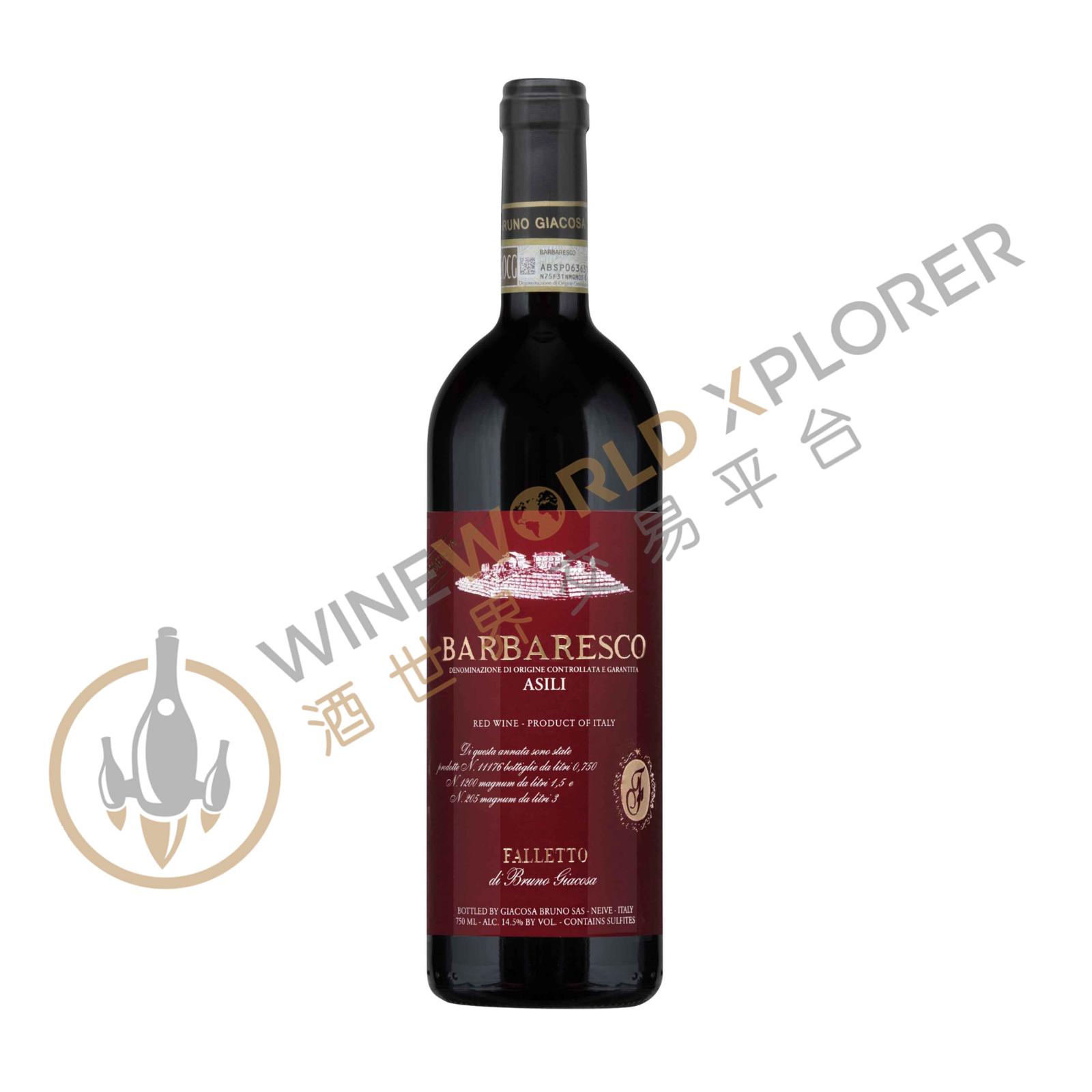
Bruno Giacosa, Barbaresco Asili Riserva 2007
 View analysis


Description
Tasting notes

Reviewed by: James Suckling
This will be in the market in 2012. This is full and rich with irresistible silky tannins. This brings more substance and richness than the white label. Lay this down until 2016. 10,000 bottles.
Reviewed by: Antonio Galloni
The 2007 Barbaresco Riserva Asili is sweet, perfumed and totally gorgeous in its round, sensual fruit. Silky, elegant tannins frame the long, harmonious finish. Stylistically the 2007 is most similar to the 2004, although it seems to have more exuberant, opulent fruit. Anticipated maturity: 2019-2037. My annual tasting with Bruno Giacosa encompassed all his 2008s and 2009s, plus the 2000 Baroli and Barbareschi, which will be covered in a subsequent article. Vintage 2008 and 2009 are both interesting, but don’t look to be as consistent across the board as 2007. Never one to say much, Giacosa is quite reserved and even severe with his own wines, with the exception of the occasional wine that crosses his lips and elicits a ‘this is good.’ A Leonardo Lo Cascio Selection, Winebow, Montvale, NJ; tel. (201) 445-0620
Reviewed by: Antonio Galloni
The 2007 Barbaresco Riserva Asili is a massive, towering wine of majestic proportions. Everything comes together in the glass; expressive aromatics, striking fruit, powerful yet silky tannins and a long, impeccable finish. This complex, kaleidoscopic Barbaresco is a wine for the ages. The Riserva Asili is a surprisingly powerful wine from this vineyard. Readers will have to wait until 2011, when the wine is released, to taste this utterly profound Barbaresco. Anticipated maturity: 2019-2037. Bruno Giacosa created quite a stir when he announced this spring that he would not bottle any of his 2006 Barolos and Barbarescos. While I wasn’t surprised he would pass on bottling a few wines – as early as spring 2007 Giacosa did not present the 2006 Barbaresco Santo Stefano and Barolo Croera in my annual barrel tastings – the decision to skip an entire vintage prompted a back and forth volley of polemics that is such an integral part of the Italian way of life. Clearly Giacosa had a difficult emotional relationship with these wines from the start, as they were made in the year he suffered a stroke and was absent from the winery for long periods of time. Perhaps Giacosa simply wanted to cancel the entire year from his memory. Or maybe it is a case where the vintage quality in Giacosa’s vineyards and later of the wines themselves in the cellar did not live up to his exacting standards. Given the emotional weight attached to this year I am not sure anyone – even Giacosa himself – will fully understand all of the circumstances behind the decision not to bottle the wines. After having tasted Giacosa’s 2006 Barolos and Barbarescos on numerous occasions I am convinced he has bottled lesser wines in the past. It is important to remember that virtually all of Piedmont’s top estates are essentially small, family-run wineries, and in that regard Giacosa is no exception. What seems pretty obvious at this point is that under normal circumstances without emotional duress, Giacosa and his team would have been better equipped to deal with the challenges of the harvest. Giacosa’s decision is more a reflection of the estate’s inability to deal with a difficult harvest (for understandable reasons) rather than a commentary on the intrinsic quality of the vintage itself. Giacosa may also have been prompted to skip an average year for his wines based on the exceptional juice he put into the bottle in the surrounding 2004, 2005 and 2007 vintages. Sadly, prices for the top bottles – the Red Label Barolo and Barbaresco Riservas in particular – continue to climb as collectors throughout the world recognize the quality of the wines. Still, at the risk of sounding out of touch with today’s economic environment, it is pretty clear that Giacosa’s finest wines remain relatively well-priced within the context of the world finest and most collectible wines. A recent bottle of the 1989 Barbaresco Riserva Santo Stefano stood shoulder to shoulder with the 1989 Haut-Brion and Rousseau’s 1990 Chambertin....in fact, it may have even surpassed those icons! A Leonardo Lo Cascio Selection, Winebow, Montvale, NJ; tel. (201) 445-0620
Reviewed by: Antonio Galloni
Giacosa’s 2007 Barbaresco Riserva Asili is flamboyant, exotically ripe and stunning in its absolute beauty. Bright red cherry fruit, rose petal, violet and mint abound in a spellbinding, utterly thrilling Barbaresco. I have always adored the 2007. Once again, it is pure magic.
Reviewed by: Antonio Galloni
The 2007 Barbaresco Riserva Asili, which I have had several times recently, is pure sensuality. Hard candy, rose petals, sweet red berries and licorice wrap around the palate in one of the silkiest, most refined expressions of Nebbiolo I have ever tasted. A wine of pure sensuality and grace, the 2007 is flat-out stunning.
Reviewed by: Antonio Galloni
What can I possibly say about Bruno Giacosa's 2007 Barbaresco Riserva Asili? That it was stunning? Obvious. Emotional? Of course. From the moment it was poured, the 2007 Asili was utterly captivating. Sweet rose petals and the sweetest of red berries – all framed by silky tannins – graced the palate in this exquisite Barbaresco. Surprisingly open for a young Barbaresco, the 2007 was flat-out beautiful. The style was so deeply personal, I could only wonder why there aren't more wines like this being made in Piedmont. Wow!
Reviewed by: Antonio Galloni
The 2007 Barbaresco Riserva Asili is sweet, perfumed and totally gorgeous in its round, sensual fruit. Silky, elegant tannins frame the long, harmonious finish. Stylistically the 2007 is most similar to the 2004, although it seems to have more exuberant, opulent fruit.
Reviewed by: Antonio Galloni
The 2007 Barbaresco Riserva Asili is a massive, towering wine of majestic proportions. Everything comes together in the glass; expressive aromatics, striking fruit, powerful yet silky tannins and a long, impeccable finish. This complex, kaleidoscopic Barbaresco is a wine for the ages. The Riserva Asili is a surprisingly powerful wine from this vineyard. Readers will have to wait until 2011, when the wine is released, to taste this majestic Barbaresco.
Reviewed by: Stephen Tanzer
Good deep red. Very ripe aromas of red cherry, black raspberry, rose petal and flint. Huge yet magically light on its feet, with Musigny-like flavors of red fruits, flowers and pungent minerals. Wonderfully sweet and deep wine with great sap and floral lift; I find this considerably less medicinal than the normale Very much like a great Burgundy but with even more energy. The alcohol here is about 14% and the pH is 3.45.
About the Producer
Bruno Giacosa, located in the south and south-west of Piemonte, has been performing well for three generations, thanks to the careful selection of high quality grapes and the emphasis on traditional winemaking techniques. The vineyard covers 44.7 acres (18 hectares) and is planted with Nebbiolo d'Alba, Barbera and Dolcetto varieties. The average age of the vines is 15 years and the planting density is between 4,500 and 5,000 vines per hectare, with an average yield of 4,800 litres per hectare. In terms of winemaking, the owner has a classic quote: "For us, the philosophy of traditionalism means making wines that are not only strongly local to the vine and the grape variety, but also maintain the various local terroirs. We have always made single-variety wines. Our winemaking techniques have been improved and we also make use of gentle pressing, crushing operations, advanced rotary systems and optimised cold and hot treatment techniques." For Garcosa, technology and tradition are not necessarily at odds with each other. In the winemaking process, the grapes are first fermented in steel containers and then transferred to wooden containers for ageing, which varies slightly depending on the type of wine. Finally, the wine is bottled without filtering. The main wines produced by the winery are the Barbaresco Garina, the Barbaresco Santo Stefano, the Barbaresco Asili, the Barbaresco Wabasha and the Barbaresco Asili. Barbaresco Rabaja, Barolo Falletto and Barolo Le Rocche del Falletto. Some of the more recent vintages are 2001, 2000, 1998, 1997, 1996, 1990, 1989, 1982 and 1978. These vintages are often relatively closed and uninteresting when first bottled, but after 10 years in the cellar, they all show an irresistible magic.
