
 Wine Advisor



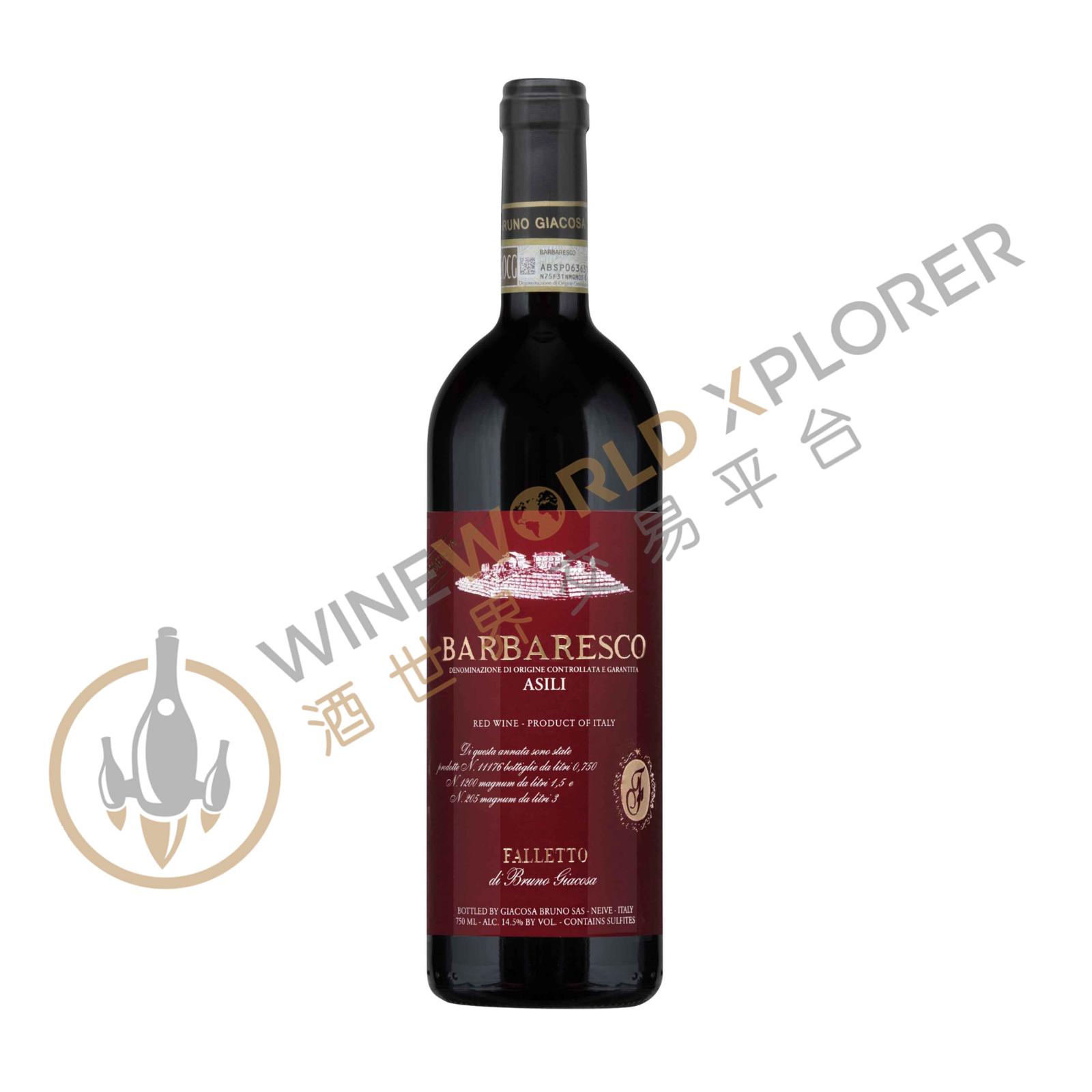
Bruno Giacosa, Barbaresco Asili Riserva 1990
 View analysis


Description
Tasting notes

Reviewed by: Antonio Galloni
The 1990 Barbaresco Riserva Asili is another rarity. Although today Giacosa is often associated with this grand cru vineyard, the 1990 was only his second wine from the site, and he produced a mere 2,000 bottles. The Musigny-like nose alone is extraordinary. Red berries, roses, flowers, sweet spices and minerals emerge from a delicate, nuanced frame. Textural finesse, subtlety and a cashmere-like elegance define this delicious Barbaresco. Although it will probably continue to age gracefully for years, this is a Giacosa Red Label that I wouldn’t hang on to for decades, as the fruit is showing the early signs of fading. It would be a pity to miss this sublime Barbaresco in its peak drinking window. Anticipated maturity: 2010-2020. Bruno Giacosa’s wines are well represented in my personal cellar, which was the source for the vast majority of these bottles. I have had the good fortune to taste all of Giacosa’s 1989s and 1990s from multiple sources over the last year, and therefore can report that these notes are representative of what readers can expect from well-stored bottles. I consider 1989 and 1990 – along with 1978, 1982, 1996, 2001, 2004 and 2007 – to be among Giacosa’s finest vintages. The bevy of Red Label Riservas in this article says it all. In 1989 and 1990 Giacosa produced an immense number of legendary wines. In fact, he is one of the very few producers who did exceptionally well in both years. In general the 1989s are a touch more layered and nuanced, while the 1990s are impressive for their massive concentration. If forced to state a preference, I would say 1990 gets the nod for its consistency from top to bottom, even if few of those wines reach the sublime heights of the very finest 1989s. Still, these are relatively small distinctions at this high level. Readers who have the opportunity to taste any of these wines should not think twice. By the late 1980s Giacosa had begun to move towards an enlightened traditional style with the introduction of the French oak casks he now uses exclusively. Fermentations and barrel aging, however, remained very much within the framework of traditional winemaking, resulting in a combination that was electric. Readers will note that many of Giacosa’s Red Label Riservas during this time were made in small lots (such as the 1990 Asili and 1989 Collina Rionda), and that for practical purposes those wines were aged in medium-size casks rather than large casks.
About the Producer
Bruno Giacosa, located in the south and south-west of Piemonte, has been performing well for three generations, thanks to the careful selection of high quality grapes and the emphasis on traditional winemaking techniques. The vineyard covers 44.7 acres (18 hectares) and is planted with Nebbiolo d'Alba, Barbera and Dolcetto varieties. The average age of the vines is 15 years and the planting density is between 4,500 and 5,000 vines per hectare, with an average yield of 4,800 litres per hectare. In terms of winemaking, the owner has a classic quote: "For us, the philosophy of traditionalism means making wines that are not only strongly local to the vine and the grape variety, but also maintain the various local terroirs. We have always made single-variety wines. Our winemaking techniques have been improved and we also make use of gentle pressing, crushing operations, advanced rotary systems and optimised cold and hot treatment techniques." For Garcosa, technology and tradition are not necessarily at odds with each other. In the winemaking process, the grapes are first fermented in steel containers and then transferred to wooden containers for ageing, which varies slightly depending on the type of wine. Finally, the wine is bottled without filtering. The main wines produced by the winery are the Barbaresco Garina, the Barbaresco Santo Stefano, the Barbaresco Asili, the Barbaresco Wabasha and the Barbaresco Asili. Barbaresco Rabaja, Barolo Falletto and Barolo Le Rocche del Falletto. Some of the more recent vintages are 2001, 2000, 1998, 1997, 1996, 1990, 1989, 1982 and 1978. These vintages are often relatively closed and uninteresting when first bottled, but after 10 years in the cellar, they all show an irresistible magic.
